Kirki has returned to the wild
The young bear rescued by ARCTUROS after a serious accident has been reintroduced into her natural habitat
Kirki, the young bear that had been found in a coma following a serious accident in August 2025, has returned to the wild.Her reintroduction was carried out by the ARCTUROS Rehabilitation and Reintroduction Team, after months of care, monitoring and rehabilitation. It is the best possible outcome for a difficult case that began when Kirki, at only seven months old, was transferred to ARCTUROS’ facilities in extremely critical condition.
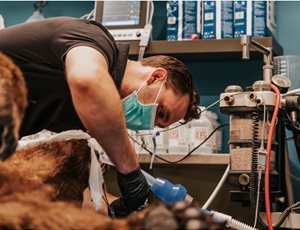
After many hours of effort, the young bear woke up from the coma and gradually began to regain her strength. At first, she could barely stand on her feet, but her recovery was steady. Over time, she regained her weight and strength. Most importantly, she retained her wild character and remained cautious around humans - a key condition for her return to the natural environment.
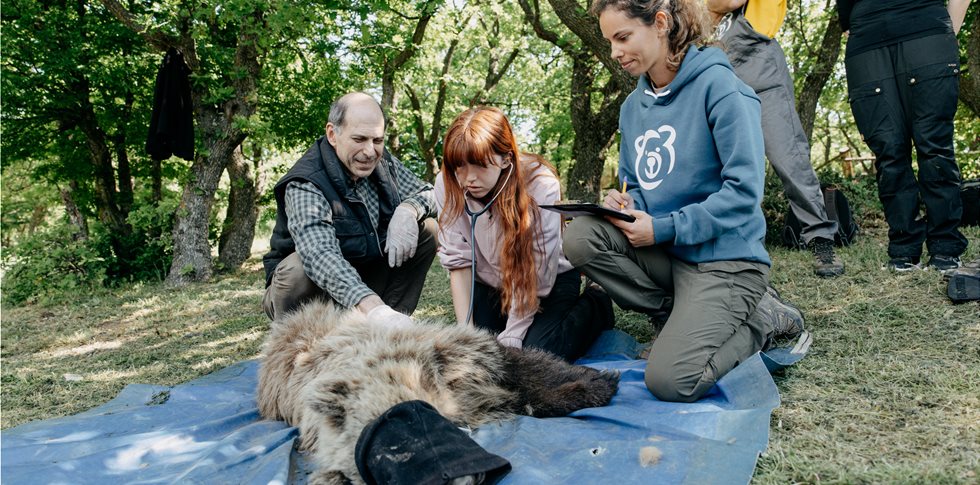
Kirki is wearing a special telemetry collar, through which the ARCTUROS scientific team is monitoring her movements after the reintroduction. The first data are encouraging, and monitoring will continue in order to assess her adaptation to life in the wild.
The action is part of the Large Carnivore Connect project, implemented with the support of the Prespa Ohrid Nature Trust (PONT). The project aims to maintain ecological connectivity for large carnivores in the wider transboundary Prespa-Ohrid region. Monitoring Kirki after her reintroduction through telemetry contributes to a better understanding of bear movements and adaptation in the natural environment.
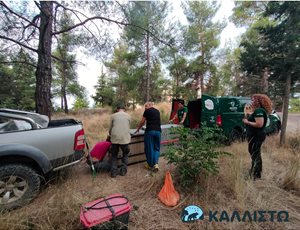
Once again, the reintroduction was also an important example of environmental education in practice. Six children from primary school and kindergarten, four postgraduate students from the School of Biology of Aristotle University of Thessaloniki, enrolled in the MSc programme “Biodiversity and Biological Resources Management”, and ARCTUROS volunteers observed the operation in the field. Staff from NECCA’s Northern Pindos National Park Management Unit were also present, together with the special bear deterrence and poisoned bait detection units and their specially trained dogs, as part of a joint educational action with ARCTUROS.
Kirki’s case is a reminder that the goal of wildlife rehabilitation is not to familiarise a wild animal with humans, but to return it to the wild whenever this is possible and safe.