Πίσω
19.08.2026
Successful capture of the habituated wolf in Polichni, Thessaloniki
The operation to capture a female wolf that had developed problematic habituation to human presence and had been visiting residential areas of north-western Thessaloniki in search of food over the past few months was successfully completed.
Based on the available evidence and information collected during the preceding period, including eyewitness accounts, this wolf is believed to have been involved in the incident in which a four-year-old child was injured on 30 July 2026 in the Polichni area.
In response to this serious incident, a decision for the animal’s removal was issued immediately by the Wildlife and Hunting Management Department of the General Directorate of Forests and Forest Environment of the Ministry of Environment and Energy, following a meeting of the authorities and organisations involved at the Thessaloniki Forest Service. The relevant recommendation of the European LIFE Wild Wolf project was also taken into account.
According to the preliminary protocol for responding to incidents involving wolves approaching urban and peri-urban areas, developed within the framework of the European LIFE Wild Wolf project, which in Greece is implemented by the environmental organisation CALLISTO and the Natural Environment and Climate Change Agency (NECCA), a recorded attack on a person constitutes an incident falling within the highest risk category. Combined with the animal’s serious health condition and its repeated presence in residential areas, this made its immediate capture and removal necessary, with the protection of human safety as the primary consideration.
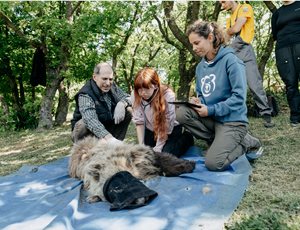
On the evening of Thursday, 13 August 2026, during the first day that the specialised traps installed in the preceding days by the environmental organisation **CALLISTO** were activated, the wolf was captured. Its removal from the trap and subsequent handling were carried out by specialised staff from CALLISTO’s Wolf Intervention Team, with the immediate assistance of personnel from the Thessaloniki Forest Service and the Central Macedonia Protected Areas Management Unit of NECCA.
During the operation, it was established that the animal was a relatively small wolf weighing 24.5 kg, in severely compromised health and visibly undernourished. It bore scars from previous injuries, while its left hind limb had been amputated, with an open wound and bleeding at the amputation site. Its serious health condition provided an additional reason why its capture and removal were necessary.
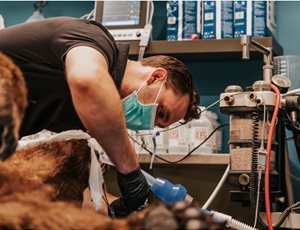
The wolf received the necessary veterinary care and was subsequently placed in a specialised transport crate, where it remained overnight under appropriate conditions and recovered smoothly from anaesthesia. Blood samples were also collected for genetic analyses and will be delivered to the Laboratory of the Department of Genetics, Development and Molecular Biology of the School of Biology at Aristotle University of Thessaloniki, as provided for in the relevant decision of the Ministry of Environment and Energy.
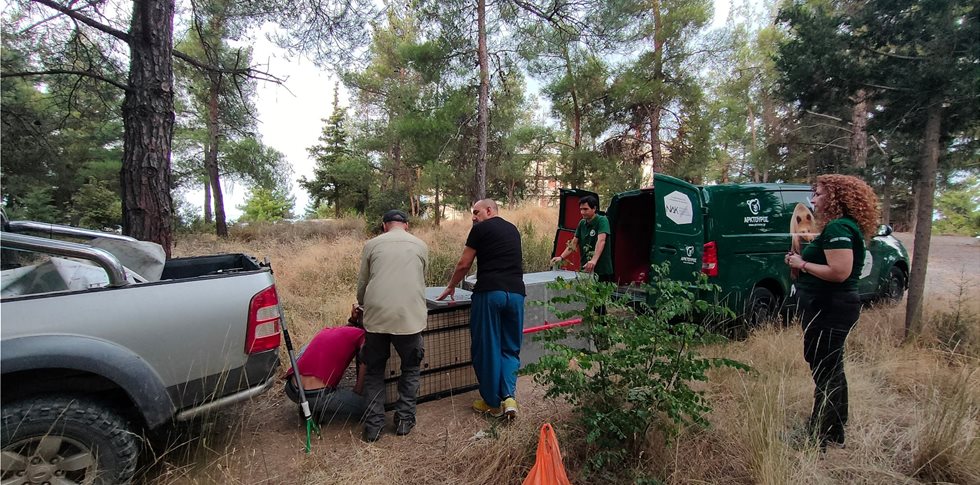
On the morning of Friday, 14 August, the animal was handed over by the environmental organisation CALLISTO and the Thessaloniki Forest Service to the environmental organisation ARCTUROS, which undertook its transfer to the Wolf & Lynx Conservation Area in Agrapidies, Florina, as well as the additional actions stipulated in the decision of the Ministry of Environment and Energy. Further veterinary examinations will be carried out over the coming days under the supervision of the School of Veterinary Medicine of Aristotle University of Thessaloniki in order to assess the wolf’s health condition.
It should be noted that this female wolf, visibly disabled as a result of the amputation, had been approaching residential areas in the municipalities of Pavlos Melas and Neapoli-Sykies over the past few months through Thessaloniki’s peri-urban forest of Seich Sou, in search of food such as waste, animal carcasses or stray animals. Its repeated presence in residential areas and access to human-related food sources appear to have contributed to the animal’s gradual habituation to human activity and presence.
The operation to capture and remove this wolf was carried out pursuant to Decision No. ΥΠΕΝ/ΔΔΔ/89961/2860/11-08-2026 (ADA: ΡΠ9Μ4653Π8-7Μ1) of the Secretary General for Forests of the Ministry of Environment and Energy, following the recorded incident in which a four-year-old child was attacked by a canid with similar characteristics in the Polichni area of Thessaloniki.
It is important to emphasise, however, that the presence of a wolf near a residential or peri-urban area does not in itself mean that the animal is likely to attack a person. Wolves are generally wary of humans, while attacks by healthy wolves on people are rare and the risk to human safety remains low. Their presence near residential areas is often associated with easily accessible food sources, such as waste, animal carcasses, stray animals or other animals that may constitute easy prey, including livestock kept in unprotected facilities. Repeated access to such sources can gradually lead to habituation to human presence.
For this reason, the appearance of a wolf near a settlement should not cause panic, but should be addressed calmly, by following basic preventive measures and informing the competent authorities, such as the local Forest Service or Police Department. Under no circumstances should people approach wolves or provide them with food, either directly or indirectly.
The successful outcome of the operation to capture this wolf highlights the importance of systematically recording and scientifically monitoring each incident, ensuring its timely and evidence-based assessment, and strengthening cooperation between the competent public authorities, the scientific community and environmental organisations.
Signatory Authorities and Organisations:
Environmental Organisation CALLISTO
Thessaloniki Forest Service
Environmental Organisation ARCTUROS